Troubleshooting#
Troubleshooting Add-on#
Enable Debug Logging
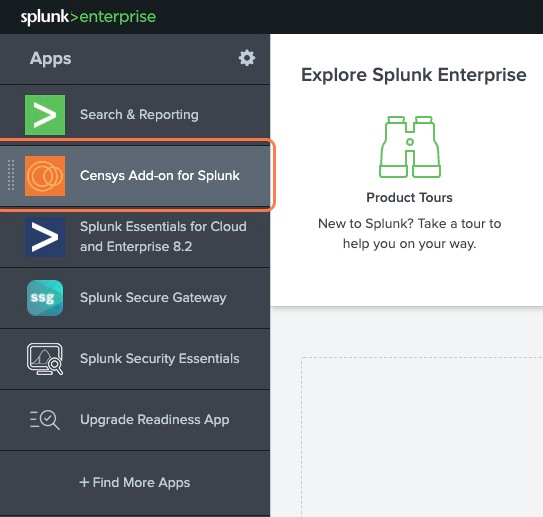
Navigate to the Censys Add-on for Splunk.
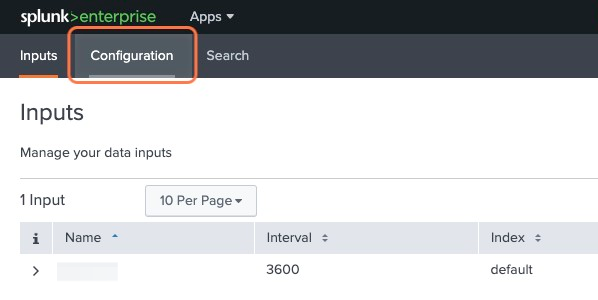
Navigate to the Configuration tab.
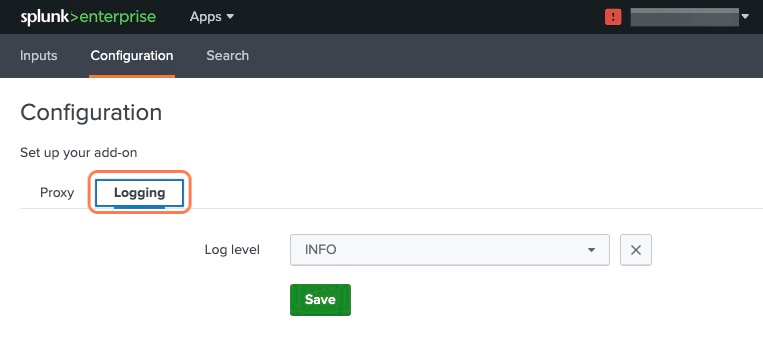
Navigate to the Logging section.
Select the
DEBUGoption from the Log level dropdown menu.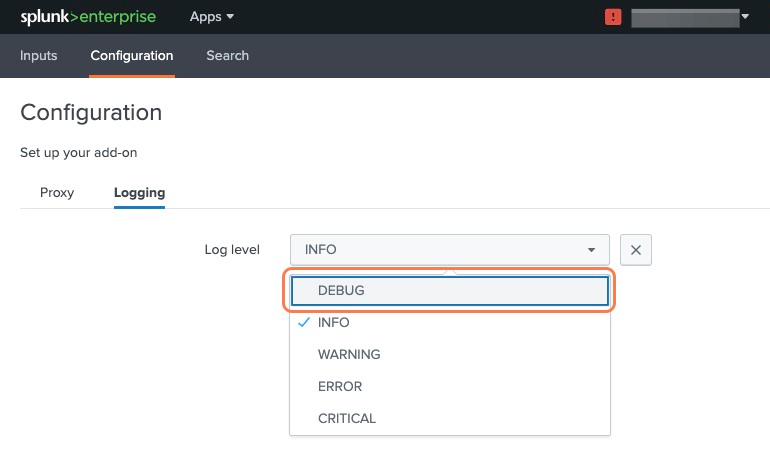
Configure Proxy Settings
The Censys Add-on for Splunk supports proxy configuration for outbound API traffic. This is useful in environments where direct internet access is restricted. How you configure the proxy depends on whether you use modular inputs (Inputs tab) or search commands (Search tab).
Proxy for modular inputs (Inputs tab)
Modular inputs (e.g. Censys ASM Risks, Censys ASM Logbook) use the proxy configured in the add-on’s Configuration page.
Navigate to the Censys Add-on for Splunk.
Navigate to the Configuration tab.
Navigate to the Proxy section.
Configure the following settings:
Enable: Check this box to enable proxy support
Proxy Type: Select the proxy protocol type:
http- HTTP proxy (most common, supports both HTTP and HTTPS traffic)socks4- SOCKS4 proxysocks5- SOCKS5 proxy
Host: Enter the proxy server hostname or IP address
Port: Enter the proxy server port number
Username: (Optional) Enter proxy authentication username if required
Password: (Optional) Enter proxy authentication password if required
Save the configuration.
Proxy settings are then applied automatically to all API calls made by the modular inputs.
Proxy for search commands (Search tab)
Search commands (e.g. censysasmrisktypes, censysasmriskinstances) do not use the Configuration proxy. They use HTTPS_PROXY and NO_PROXY from the environment. Search commands run in worker subprocesses that often do not receive app-level environment variables from server.conf. Use splunk-launch.conf so the variables apply to all Splunk processes, including search workers.
Configure proxy using splunk-launch.conf (recommended)
Open splunk-launch.conf on the Splunk server:
Path:
$SPLUNK_HOME/etc/splunk-launch.confExamples:
/opt/splunk/etc/splunk-launch.conf(Linux),C:\Program Files\Splunk\etc\splunk-launch.conf(Windows)
Add or edit an
[env]stanza at the end of the file:[env] HTTPS_PROXY = https://your-proxy-host:8080 NO_PROXY = localhost,127.0.0.1
Use your actual proxy URL and port. The proxy URL itself can use
https://orhttp://(e.g.http://proxy.example.com:8080is fine for HTTPS traffic); HTTPS_PROXY is the variable that must be set for the Censys search commands.Restart Splunk so the new environment is picked up:
$SPLUNK_HOME/bin/splunk restart
Run a search that uses a Censys search command (e.g.
| censysasmriskinstances).